Click image to zoom
Dressing A Nation: Sumerbank Patterns Between the Years of 1956-2000 - Exhibition in Ankara
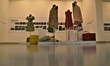
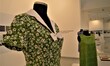
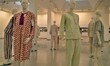
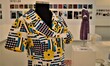
Traditional children's clothes are seen as a part of the 'Dressing A Nation: Sumerbank Patterns Between the Years of 1956-2000' - Exhibition in Ankara, Turkey on January 20, 2018. Sumerbank as one of the leading institutions through the development period of 1930's remained a symbol of the Republic of Turkey up until the privatization period. Sumerbank's beginnings using national products as a statist policy, development politics through the nation's economy, and its position in the Turkish textile history made this institution a cultural heritage. Its fabrics led to the development of a national textile design style and fashion by introducing unique fabrics and distinctive designs. The founding principle was to develop industry, to encourage the use of local products, and to maintain the integration of urban and rural areas starting from the 1930's. Along with the privatization process started in 1987, some of the settlements like the Halkapinar Printing Textile Factory in Izmir were demolished, some were handed over to private sector, municipalities, and universities, and most of the products such as fabrics, and machinery were destroyed. After the rapidly changing conditions of the institution, production at Sumerbank was stopped after 2000. Sumerbank left behind a very important textile archive. Merinos Textile Industry Museum in Bursa successfully transformed its archive into a museum. The textile archive of the Nazilli Printing Textile Factory in Aydin was protected by Adnan Menderes University while the textile archive from the Halkapinar Printing Textile Factory was protected and conserved by Izmir University of Economics, Faculty of Fine Arts and Design, Department of Fashion and Textile Design. The exhibition includes a timeline containing notable historical global fashion cultural events from the early 1930s to 2000s and their influence in the country. Selected fabrics from approximately 200,000 different fabrics produced in the Halkapinar Printing Textil
Photo Details
| Photo ID | #2433629 |
|---|---|
| Date Taken | |
| Location | N/A |
| Photographer | Altan Gocher/NurPhoto |
| Category | Arts, Culture and Entertainment |
| Copyright | © 2026 NurPhoto - Altan Gocher/NurPhoto |
Related Keywords
2026 NurPhoto. All rights reserved.
This image is the property of NurPhoto and is protected under international copyright laws.
Similar Photos
View All