Search Editorial Photos
"container platform"
99 professional editorial images found
#12978721
11 November 2025
A food courier wears a bright blue jacket and a large Deliveroo backpack and rides a bicycle through a brightly lit underpass or pedestrian tunnel in Venice Mestre, Italy, on November 11, 2021.
Restricted to Editorial Use Only.
Commercial use is not permitted without prior authorization.
Please contact us for more information.
#12928887
31 October 2025
The latest generation ICE L long-distance train, consisting of a low-floor train set and a Vectron (Class 105) locomotive, is seen on rails in Munich, Bavaria, Germany, on October 28, 2025. This Deutsche Bahn train allows for step-free access and is scheduled to replace Intercity 1 trains on the Berlin-Cologne route from December 2025, operating at a maximum speed of 230 km/h.
Restricted to Editorial Use Only.
Commercial use is not permitted without prior authorization.
Please contact us for more information.
#12907361
25 October 2025
A blue Wolt delivery partner thermal bag is mounted on the rear rack of a bicycle, set against a vibrant, solid green wall, illustrating the last-mile logistics of the food and retail delivery service in Munich, Bavaria, Germany, on October 24, 2025.
Restricted to Editorial Use Only.
Commercial use is not permitted without prior authorization.
Please contact us for more information.
#12753836
14 September 2025
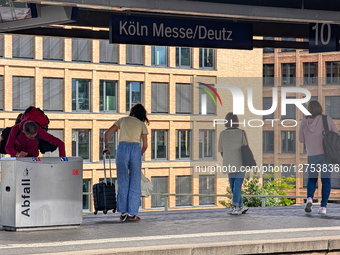
A man collects returnable bottles from a trash can while other passengers with luggage wait at Cologne Messe Deutz Station in Cologne, North Rhine-Westphalia, Germany, on September 5, 2025.
Restricted to Editorial Use Only.
Commercial use is not permitted without prior authorization.
Please contact us for more information.
#12735345
9 September 2025
GDANSK, POLAND – AUGUST 31: Damen Shipyards in Gdansk are seen from the area near the Monument to the Fallen Shipyard Workers of 1970 on the 45th anniversary of the Gdansk Agreement in Gdansk, Pomeranian Voivodeship, Poland, on August 31, 2025.
Restricted to Editorial Use Only.
Commercial use is not permitted without prior authorization.
Please contact us for more information.
#12680686
27 August 2025
Boudha Stupa is semicircle-shaped and contains the relics and remains of Buddha. The stupa's massive mandala makes it one of the largest spherical stupas in the world. Boudha Stupa is listed in the World Heritage List by UNESCO in 1979, and it is one of the most popular tourist sites in Kathmandu. The stupa dates from 600 AD and is built by a Tibetan king. The stupa is a historical pilgrimage site for Buddhists around the world. The stupa is built using many kilograms of gold for decoration. The giant Boudhanath Stupa serves as a gateway to heaven, acting as a horizon between the earth and sky. The base of the stupa structure consists of three large platforms decreasing in size. These platforms symbolize the sky, whereas the circular vase supporting the semi-sphere signifies water. The eyes of Buddha painted on the stupa are described as inscrutable, impassive, empathetic, and shrewd. The five most promising elements representing Buddha, i.e., earth, air, water, fire, and space, are comprised in the stupa architecture.
Restricted to Editorial Use Only.
Commercial use is not permitted without prior authorization.
Please contact us for more information.
#12680671
27 August 2025
A Nepali Buddhist performs rituals in the premises of Boudhanath Stupa, a UNESCO World Heritage Site in Kathmandu, Nepal, on August 27, 2025. Boudha Stupa is semicircle-shaped and contains the relics and remains of Buddha. The stupa's massive mandala makes it one of the largest spherical stupas in the world. Boudha Stupa is listed in the world heritage list by UNESCO in 1979, and it is one of the most popular tourist sites in Kathmandu. The stupa dates from 600 AD and is built by a Tibetan king. The stupa is a historical pilgrimage site for all Buddhists around the world. The stupa is built using many kilograms of gold for decoration. The giant Boudhanath Stupa serves as a gateway to heaven, acting as a horizon between the earth and sky. The base of the stupa structure consists of three large platforms decreasing in size. These platforms symbolize the sky, whereas the circular vase supporting the semi-sphere signifies water. The eyes of Buddha painted on the stupa are described as inscrutable, impassive, empathetic, and shrewd. The five most promising elements representing Buddha, i.e., earth, air, water, fire, and space, are comprised in the stupa architecture.
Restricted to Editorial Use Only.
Commercial use is not permitted without prior authorization.
Please contact us for more information.
#12680673
27 August 2025
The reflection of an aircraft along with the Boudhanath Stupa is seen in a window pane in Kathmandu, Nepal, on August 27, 2025. Boudha Stupa is semicircle-shaped and contains the relics and remains of Buddha. The stupa's massive mandala makes it one of the largest spherical stupas in the world. Boudha Stupa is listed in the world heritage list by UNESCO in 1979, and it is one of the most popular tourist sites in Kathmandu. The stupa dates from 600 AD and is built by a Tibetan king. The stupa is a historical pilgrimage site for Buddhists around the world. The stupa is built using many kilograms of gold for decoration. The giant Boudhanath stupa serves as a gateway to heaven, acting as a horizon between the earth and sky. The base of the stupa structure consists of three large platforms decreasing in size. These platforms symbolize the sky, whereas the circular vase supporting the semi-sphere signifies water. The eyes of Buddha painted on the stupa are described as inscrutable, impassive, empathetic, and shrewd. The five most promising elements representing Buddha, i.e., earth, air, water, fire, and space, are comprised in the stupa architecture.
Restricted to Editorial Use Only.
Commercial use is not permitted without prior authorization.
Please contact us for more information.
#12680674
27 August 2025
A Nepali Buddhist performs rituals in the premises of Boudhanath Stupa, a UNESCO World Heritage Site in Kathmandu, Nepal, on August 27, 2025. Boudha Stupa is semicircle-shaped and contains the relics and remains of Buddha. The stupa's massive mandala makes it one of the largest spherical stupas in the world. Boudha Stupa is listed in the world heritage list by UNESCO in 1979, and it is one of the most popular tourist sites in Kathmandu. The stupa dates from 600 AD and is built by a Tibetan king. The stupa is a historical pilgrimage site for all Buddhists around the world. The stupa is built using many kilograms of gold for decoration. The giant Boudhanath Stupa serves as a gateway to heaven, acting as a horizon between the earth and sky. The base of the stupa structure consists of three large platforms decreasing in size. These platforms symbolize the sky, whereas the circular vase supporting the semi-sphere signifies water. The eyes of Buddha painted on the stupa are described as inscrutable, impassive, empathetic, and shrewd. The five most promising elements representing Buddha, i.e., earth, air, water, fire, and space, are comprised in the stupa architecture.
Restricted to Editorial Use Only.
Commercial use is not permitted without prior authorization.
Please contact us for more information.
#12680675
27 August 2025
Pigeons take flight against the backdrop of Boudhanath Stupa, a UNESCO World Heritage Site in Kathmandu, Nepal, on August 27, 2025. Boudha Stupa is semicircle-shaped and contains the relics and remains of Buddha. The stupa's massive mandala makes it one of the largest spherical stupas in the world. Boudha Stupa is listed in the world heritage list by UNESCO in 1979, and it is one of the most popular tourist sites in Kathmandu. The stupa dates from 600 AD and is built by a Tibetan king. The stupa is a historical pilgrimage site for Buddhists around the world. The stupa is built using many kilograms of gold for decoration. The giant Boudhanath Stupa serves as a gateway to heaven, acting as a horizon between the earth and sky. The base of the stupa structure consists of three large platforms decreasing in size. These platforms symbolize the sky, whereas the circular vase supporting the semi-sphere signifies water. The eyes of Buddha painted on the stupa are described as inscrutable, impassive, empathetic, and shrewd. The five most promising elements representing Buddha, i.e., earth, air, water, fire, and space, are comprised in the stupa architecture.
Restricted to Editorial Use Only.
Commercial use is not permitted without prior authorization.
Please contact us for more information.
#12680677
27 August 2025
A Nepali Buddhist monk cleans the dome of Boudhanath Stupa, a UNESCO World Heritage Site in Kathmandu, Nepal, on August 27, 2025. Boudha Stupa is semicircle-shaped and contains the relics and remains of Buddha. The stupa's massive mandala makes it one of the largest spherical stupas in the world. Boudha Stupa is listed in the world heritage list by UNESCO in 1979, and it is one of the most popular tourist sites in Kathmandu. The stupa dates from 600 AD and is built by a Tibetan king. The stupa is a historical pilgrimage site for Buddhists around the world. The stupa is built using many kilograms of gold for decoration. The giant Boudhanath Stupa serves as a gateway to heaven, acting as a horizon between the earth and sky. The base of the stupa structure consists of three large platforms decreasing in size. These platforms symbolize the sky, whereas the circular vase supporting the semi-sphere signifies water. The eyes of Buddha painted on the stupa are described as inscrutable, impassive, empathetic, and shrewd. The five most promising elements representing Buddha, i.e., earth, air, water, fire, and space, are comprised in the stupa architecture.
Restricted to Editorial Use Only.
Commercial use is not permitted without prior authorization.
Please contact us for more information.
#12680683
27 August 2025
A Nepali Buddhist monk circumambulates the Boudhanath Stupa, a UNESCO World Heritage Site in Kathmandu, Nepal, on August 27, 2025. Boudha Stupa is semicircle-shaped and contains the relics and remains of Buddha. The stupa's massive mandala makes it one of the largest spherical stupas in the world. Boudha Stupa is listed in the world heritage list by UNESCO in 1979, and it is one of the most popular tourist sites in Kathmandu. The stupa dates from 600 AD and is built by a Tibetan king. The stupa is a historical pilgrimage site for all Buddhists around the world. The stupa is built using many kilograms of gold for decoration. The giant Boudhanath Stupa serves as a gateway to heaven, acting as a horizon between the earth and sky. The base of the stupa structure consists of three large platforms decreasing in size. These platforms symbolize the sky, whereas the circular vase supporting the semi-sphere signifies water. The eyes of Buddha painted on the stupa are described as inscrutable, impassive, empathetic, and shrewd. The five most promising elements representing Buddha, i.e., earth, air, water, fire, and space, are comprised in the stupa architecture.
Restricted to Editorial Use Only.
Commercial use is not permitted without prior authorization.
Please contact us for more information.
#12680689
27 August 2025
A Nepali Buddhist monk is silhouetted against the Boudhanath Stupa, a UNESCO World Heritage Site in Kathmandu, Nepal, on August 27, 2025. Boudha Stupa is semicircle-shaped and contains the relics and remains of Buddha. The stupa's massive mandala makes it one of the largest spherical stupas in the world. Boudha Stupa is listed in the world heritage list by UNESCO in 1979, and it is one of the most popular tourist sites in Kathmandu. The stupa dates from 600 AD and is built by a Tibetan king. The stupa is a historical pilgrimage site for Buddhists around the world. The stupa is built using many kilograms of gold for decoration. The giant Boudhanath Stupa serves as a gateway to heaven, acting as a horizon between the earth and sky. The base of the stupa structure consists of three large platforms decreasing in size. These platforms symbolize the sky, whereas the circular vase supporting the semi-sphere signifies water. The eyes of Buddha painted on the stupa are described as inscrutable, impassive, empathetic, and shrewd. The five elements representing Buddha, i.e., earth, air, water, fire, and space, are comprised in the stupa architecture.
Restricted to Editorial Use Only.
Commercial use is not permitted without prior authorization.
Please contact us for more information.
#12680690
27 August 2025
A Nepali Buddhist spins the giant Mane in the premises of Boudhanath Stupa in Kathmandu, Nepal, on August 27, 2025. Boudha Stupa is semicircle-shaped and contains the relics and remains of Buddha. The stupa's massive mandala makes it one of the largest spherical stupas in the world. Boudha Stupa is listed in the world heritage list by UNESCO in 1979, and it is one of the most popular tourist sites in Kathmandu. The stupa dates from 600 AD and is built by a Tibetan king. The stupa is a historical pilgrimage site for all Buddhists around the world. The stupa is built using many kilograms of gold for decoration. The giant Boudhanath Stupa serves as a gateway to heaven, acting as a horizon between the earth and sky. The base of the stupa structure consists of three large platforms decreasing in size. These platforms symbolize the sky, whereas the circular vase supporting the semi-sphere signifies water. The eyes of Buddha painted on the stupa are described as inscrutable, impassive, empathetic, and shrewd. The five most promising elements representing Buddha, i.e., earth, air, water, fire, and space, are comprised in the stupa architecture.
Restricted to Editorial Use Only.
Commercial use is not permitted without prior authorization.
Please contact us for more information.
#12680672
27 August 2025
A Nepali Buddhist spins the mane installed around the premises of Boudhanath Stupa, a UNESCO World Heritage Site in Kathmandu, Nepal, on August 27, 2025. Boudha Stupa is semicircle-shaped and contains the relics and remains of Buddha. The stupa's massive mandala makes it one of the largest spherical stupas in the world. Boudha Stupa is listed in the world heritage list by UNESCO in 1979, and it is one of the most popular tourist sites in Kathmandu. The stupa dates from 600 AD and is built by a Tibetan king. The stupa is a historical pilgrimage site for all the Buddhists around the world. The stupa is built using many kilograms of gold for decoration. The giant Boudhanath Stupa is a gateway to heaven, serving as a horizon between the earth and sky. The base of the stupa structure consists of three large platforms decreasing in size. These platforms symbolize the sky, whereas the circular vase supporting the semi-sphere signifies water. The eyes of Buddha painted on the stupa are diversely described as inscrutable, impassive, empathetic, and shrewd. The five most promising elements representing Buddha, i.e., earth, air, water, fire, and space, are comprised in the stupa architecture.
Restricted to Editorial Use Only.
Commercial use is not permitted without prior authorization.
Please contact us for more information.
#12680676
27 August 2025
A Nepali woman feeds the pigeons in the premises of the Boudhanath Stupa, a UNESCO World Heritage Site in Kathmandu, Nepal, on August 27, 2025. Boudha Stupa is semicircle-shaped and contains the relics and remains of Buddha. The stupa's massive mandala makes it one of the largest spherical stupas in the world. Boudha Stupa is listed in the world heritage list by UNESCO in 1979, and it is one of the most popular tourist sites in Kathmandu. The stupa dates from 600 AD and is built by a Tibetan king. The stupa is a historical pilgrimage site for all the Buddhists around the world. The stupa is built using many kilograms of gold for decoration. The giant Boudhanath stupa serves as a gateway to heaven, acting as a horizon between the earth and sky. The base of the stupa structure consists of three large platforms decreasing in size. These platforms symbolize the sky, whereas the circular vase supporting the semi-sphere signifies water. The eyes of Buddha painted on the stupa are described as inscrutable, impassive, empathetic, and shrewd. The five most promising elements representing Buddha, i.e., earth, air, water, fire, and space, are comprised in the Stupa architecture.
Restricted to Editorial Use Only.
Commercial use is not permitted without prior authorization.
Please contact us for more information.